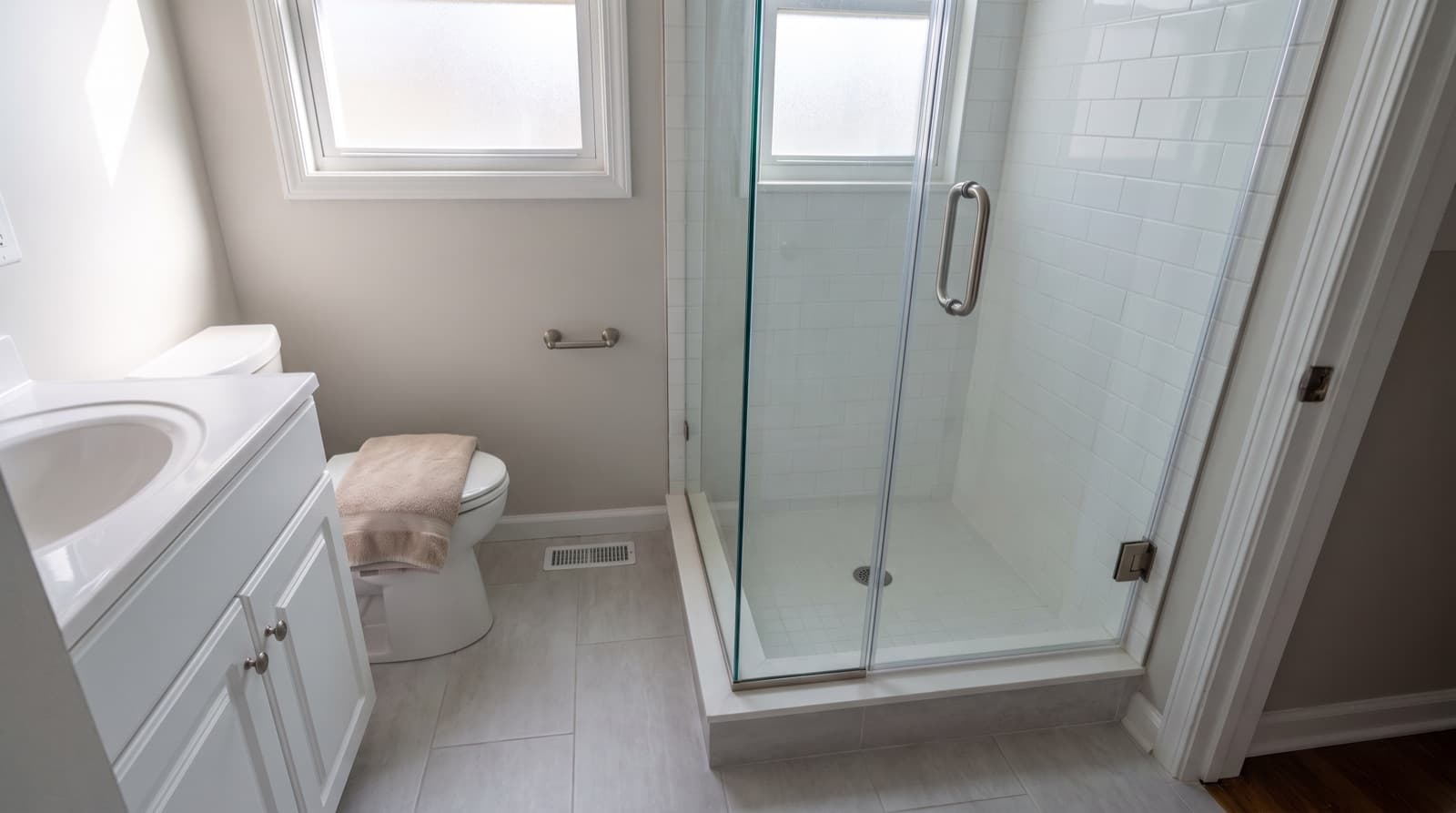
What frameless shower doors are and how they work
A frameless door has no frame to carry its weight, so the glass has to do the work. Frameless glass typically runs 3/8 inch to 1/2 inch thick, and for most showers a 3/8 inch door is enough. The door hangs on hinges fastened to the wall or to a fixed glass panel, and clips hold any fixed panels in place.
Instead of a metal frame, clear vinyl seals and a bottom sweep close the gaps along the edges. Because there are no tracks, there is less ledge for water and soap scum to collect on. People searching for seamless shower doors usually mean this look: one clean sheet of glass with hardware only at the hinge side and the handle.
When frameless is the smart call (and when it isn't)
Frameless glass makes sense when:
- The bathroom is a showpiece, like a primary bath remodel, and you want the tile to show.
- You want fewer places for mildew and soap scum to build up.
- The opening is an unusual size and needs custom shower doors cut to fit.
It may not be the right call when:
- Budget is tight. Frameless doors cost more than framed ones because of the thicker glass and the specialized install.
- Water containment is the top concern. Fixr notes frameless doors are more prone to small leaks at the gaps than framed doors, since seals do the job a frame would do.
- The wall can't carry the weight. Bob Vila notes some bathrooms may not meet the structural needs of a large 1/2 inch door without extra reinforcing.
Typical cost range (not a quote)
$600 to $5,000 per door
National cost figure; your price depends on size, glass thickness, hardware and wall conditions.
Source: Inch Calculator
Options: glass, hardware and finishes
Glass thickness. 3/8 inch is the common choice. 1/2 inch feels more solid but is heavier and costs more, and it may need different hinges. Hinge makers such as C.R. Laurence rate each hinge for a glass thickness range, a maximum door weight and a maximum width, so the installer will match hinges to the glass.
Glass type. Clear glass is standard. Low-iron glass removes most of the green tint at the edges and adds about $6 to $15 per square foot, per This Old House. Frosted glass adds about $2 to $11 per square foot.
Coatings. A water-spot coating runs about $4 to $20 per square foot. In Cincinnati, that is worth asking about (see below).
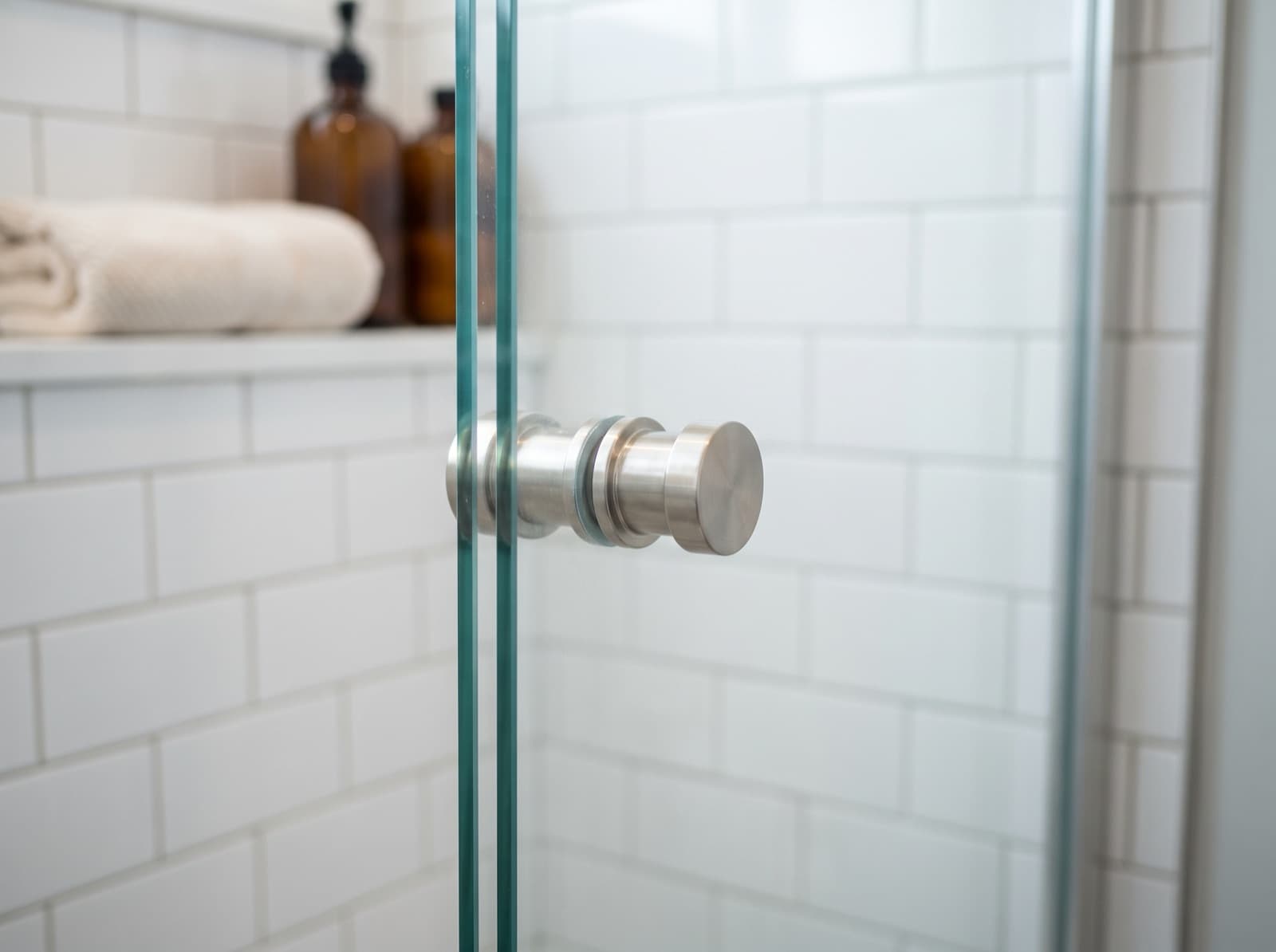
Hardware finish. Chrome, brushed nickel, matte black and brass-tone finishes are common. Pick a finish that matches your faucet and shower trim.
The Cincinnati factor: hard water and older walls
Greater Cincinnati Water Works reports plant averages of roughly 7 to 8 grains per gallon of hardness (approximate, per Culligan). On a large sheet of clear frameless glass, that shows up fast as white spots. A coated panel, a daily squeegee and a gentle cleaner go a long way.
Wall condition matters too. Census data puts the median year built at 1978 for the middle zip code in the metro, and much older in neighborhoods like Hyde Park (45208, median 1938) and Oakley (45209, median 1949). Older tile walls and curbs are often out of plumb. Frameless glass is cut to the measured opening, so an experienced installer will check for plumb and level and find solid backing for the hinges before ordering.
How a frameless install goes
Frameless glass is usually a two-visit job. The installer measures first, then the glass is ordered to those exact sizes, so it needs to be right before it is made. On the second visit the hinges and clips go in, the door is hung, and the seals and sweep are fitted.
Fixr notes that frameless hardware has to be set perfectly level to prevent sagging, and that drilling tile takes special bits. That is the main reason frameless work is best left to an experienced installer.
What to have ready when you call
- A photo of the shower opening, straight on, plus one of the curb or threshold.
- Rough width and height of the opening.
- What is there now (framed door, curtain, nothing) and whether it needs to be removed.
- Your preferred hardware finish and whether you want a coating.
- Whether the shower is a stall, a corner or a tub.
The installer will take exact measurements before the glass is ordered.
Common questions
What is the average cost to install a frameless shower door?+
Inch Calculator puts frameless doors at $600 to $5,000. Fixr lists an in-stock 60 inch frameless door at about $900 to $1,200 installed. Custom sizes, 1/2 inch glass and full enclosures push the price higher.
What are the common problems with frameless shower doors?+
The most common issues are small leaks at the edges, worn or cracked seals, and hinges that sag if they were not set perfectly level. Fixr notes the gaskets can crack over time but can be replaced. Hard water spotting is also common in Cincinnati.
What are the disadvantages of a frameless shower?+
They cost more, they are heavy, and they rely on seals rather than a frame to hold water in, so a little water can escape at the gaps. Bob Vila notes the install is fairly complicated, so most homeowners hire a pro.
Which glass is best for a frameless shower door?+
Tempered safety glass, usually 3/8 inch thick, covers most showers. Choose low-iron glass if you dislike the green edge tint, and consider a water-spot coating for Cincinnati's hard water.
What is the best protective coating for shower glass?+
Look for a factory-applied or professionally applied water-repellent coating, which This Old House prices at about $4 to $20 per square foot. Ask the installer which coating they use and how to care for it.